A World Without Work
February 24, 2026
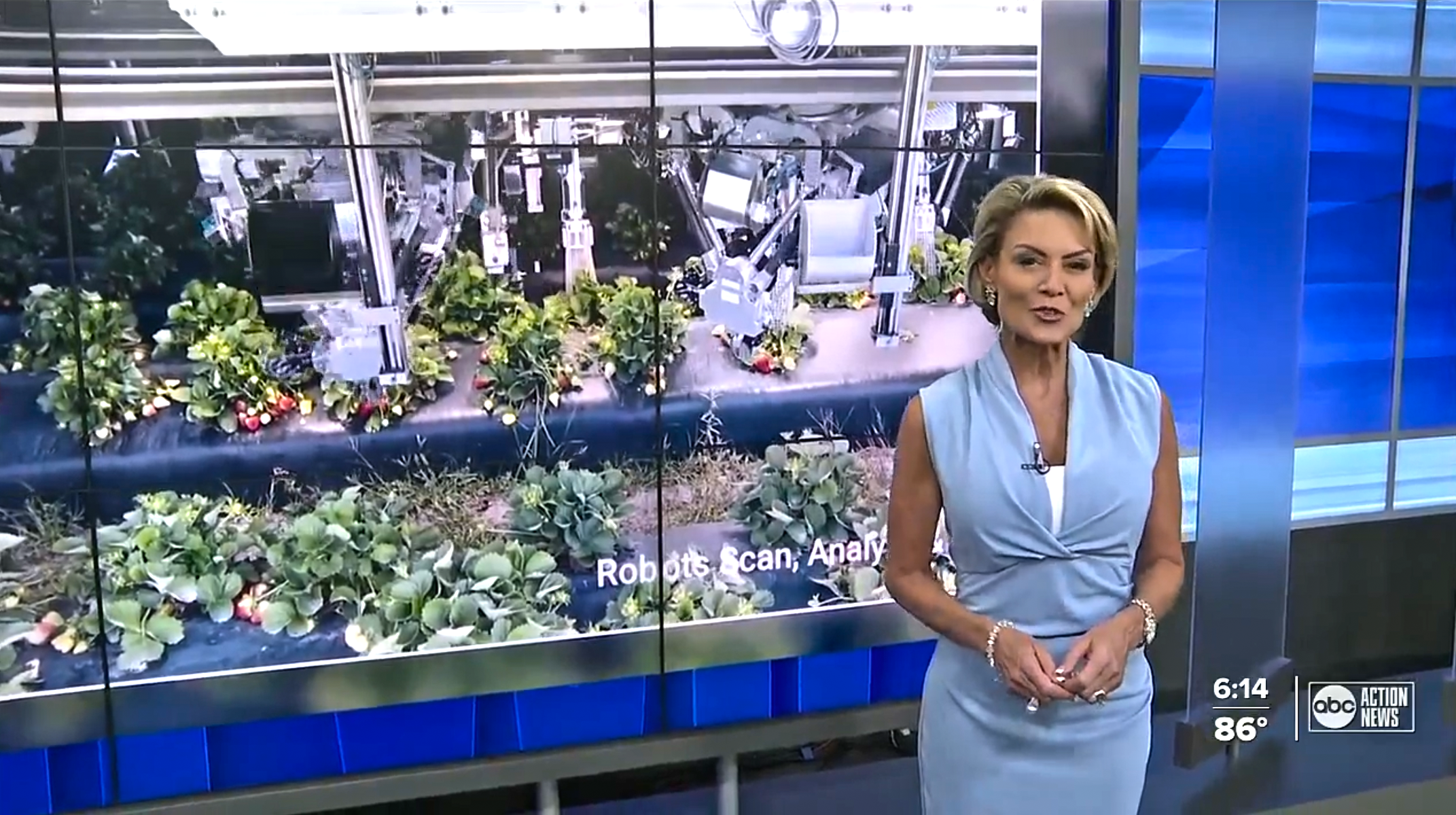 Berry Picking Robots: Wish Farms is going all in on AI and automation
Exercise Outline
CENTRAL QUESTION
Should we fully automate most economically valuable work?
- Pros and Cons (think-pair-share)
- Theory Review
- One-Sentence Moral Theories
- One-Sentence Well-Being Theories
- Apply One Moral Theory (groups of three)
- Full Class Discussion
Pros and Cons
a. We should fully automate most economically valuable work because …
- Work is often harmful: stress/anxiety, dominating influence, “temporal colonization”
- Increased efficiency and safety: fewer errors/accidents; better outcomes
- Abundance: cheaper goods/services; higher baseline standard of living
- Free time: More time for leisure, family, friends, hobbies, creative pursuits
b. We should NOT fully automate most economically valuable work because …
- Deprivation problem: if income is tied to work, mass unemployment risks poverty
- Power injustice: owners of machines may capture most benefits; inequality increase
- Meaning and purpose: many people find identity and pride through work
- Increased Dependency: loss of skills, increased passivity; vulnerability if systems fail
- Severance worry: less connection between effort and outcomes
Theory Review
Moral Theories
- Utilitarianism
-
You should do what improves overall well-being the most.
- Virtue Ethics
- You should do what a virtuous person, acting in character, would do.
- Kantianism
-
You should only do what you would will everyone else do too.
- Social Contract Theory
- You should only do what fully informed and rational people would allow when choosing rules for society together.
Well-Being Theories
- Hedonism
- Your life is good for you when it is filled with pleasure and free of pain.
- Desire Satisfactionism
- Your life is good for you when you get what you would want if you were fully and vividly informed.
- Perfectionism
-
Your life is good for you when you exercise and develop your natural capabilities.
- Objective List Theory
- Your life is good for you when it includes health, knowledge, achievement, friendship, happiness, pleasure, and virtue.
Moral Theories
- Utilitarianism
-
You should do what improves overall well-being the most.
- Virtue Ethics
-
You should do what a virtuous person, acting in character, would do.
- Kantianism
-
You should only do what you would will everyone else do too.
- Social Contract Theory
- You should only do what fully informed and rational people would allow when choosing rules for society together.
Well-Being Theories
- Hedonism
- Your life is good for you when it is filled with pleasure and free of pain.
- Desire Satisfactionism
- Your life is good for you when you get what you would want if you were fully and vividly informed.
- Perfectionism
-
Your life is good for you when you exercise and develop your natural capabilities.
- Objective List Theory
- Your life is good for you when it includes health, knowledge, achievement, friendship, happiness, pleasure, and virtue.
Pros and Cons
a. We should fully automate most economically valuable work because …
- Work is often harmful: stress/anxiety, dominating influence, “temporal colonization”
- Increased efficiency and safety: fewer errors/accidents; better outcomes
- Abundance: cheaper goods/services; higher baseline standard of living
- Free time: More time for leisure, family, friends, hobbies, creative pursuits
b. We should NOT fully automate most economically valuable work because …
- Deprivation problem: if income is tied to work, mass unemployment risks poverty
- Power injustice: owners of machines may capture most benefits; inequality increase
- Meaning and purpose: many people find identity and pride through work
- Increased Dependency: loss of skills, increased passivity; vulnerability if systems fail
- Severance worry: less connection between effort and outcomes
The Severance Objection
What is the point of life without work?
- 1.
- If humans are to live lives of flourishing and meaning, there must be some significant connection between what they do and what happens to them and the world around them.
- 2.
- Fully automating most economically valuable work will sever the significant connection between what humans do and what happens to them and the world around them.
- 3.
- Therefore, fully automating most economically valuable work undermines the capacity of humans to live lives of flourishing and meaning.
Adapted from John Danaher, Automation and Utopia: Human Flourishing in a World without Work (Harvard University Press, 2019), https://doi.org/10.2307/j.ctvn5txpc.